
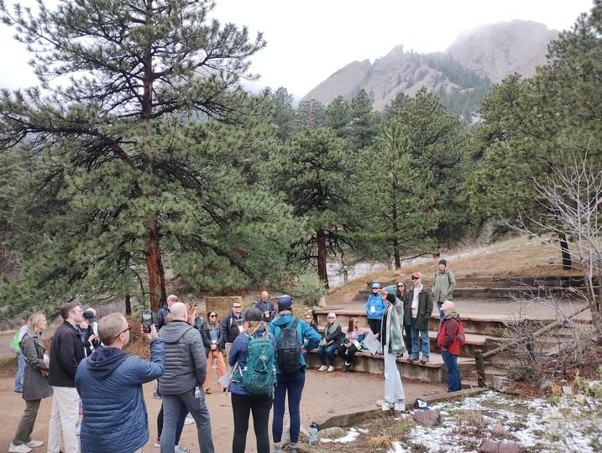
One of the interesting sessions that I attended at the American National Planning Conference in April, was on the issue of planning for wildfire. This session covered the wildfire hazard on Colorado’s front range, focusing on Larimer, Boulder and Jefferson counties.
These three countries cover a diverse range of ecosystems, from high elevation lodgepole pine forest, through the Ponderosa forests of the foothills, to the grassy plains of the east. Given that fire behaviour varies depending on habitat, the approach required to combating wildfire varies depending on location.
The session investigated the importance of wildfire mitigation and noted the elevated level of urgency required as a result of climate change.
The session introduced us to various state wildfire codes, and discussed local requirements for structures, defensible spaces, explained various voluntary programmes and incentives and how these work in Colorado.
The session identified the absolute importance of long-range planning for wildfire risk, consideration of growth management in susceptible areas, and water management.
The session also addressed effects of social events that are temporary in nature, such as when thousands of people attend festivals or concerts in rural areas and explained the importance of forward planning in these situations as well.
The session also covered community-based wildfire defuse activities and how these are valuable in conjunction with land use planning and regulation. It noted that land use patterns are important, and that traditional rural subdivision design can make it difficult to obtain access in wildfire emergencies.
The outcomes of the combined efforts of the various agencies involved in land use planning for wildfire hazard were impressive.
The integrated approach being used to combat wildfire hazard along the front range was clearly resulting in measurable positive effects, and there are certainly lessons that should be learned from the Colorado experience that must be applied with urgency in New Zealand, and especially in Canterbury, where we are at increasing risk of wildfire hazard around the perimeters of our towns and cities.
Leave a Reply